A wallet comes down to two things we rarely check before ordering: how many cards you carry and which bag it has to fit into. Everything else — print, colour, collection — comes after.
In short: if you carry lots of cards, unfolded notes and documents, you need a large model, over 20 cm. If you carry small bags or compact crossbodies, a medium or compact model is the right choice. All the Anekke wallets in our selection have RFID protection.
Choose the size to suit your bag, not the other way round
The usual mistake is buying a large wallet and then finding it takes up half your crossbody bag. Compare the length of the wallet with the width of the bag you carry most often: if the difference is under three centimetres, it will be a tight fit.
| Size | Model | Dimensions | Best for |
|---|---|---|---|
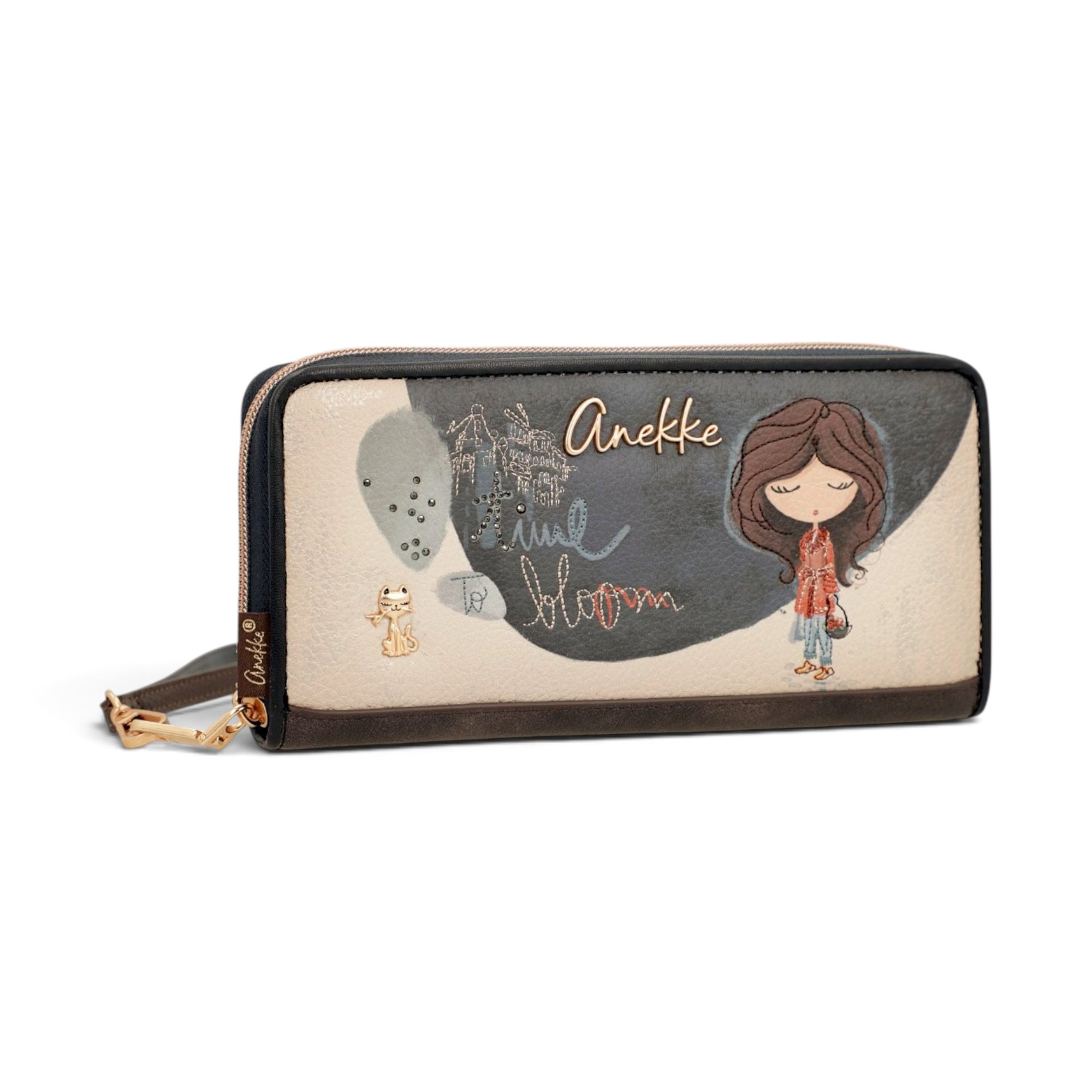
| Large | Anekke Tulip 43709-908 | 22 × 11 × 3 cm | Lots of cards, unfolded notes, medium and large bags |
| Large, rigid | Anekke Orchestra 43809-908 | 21 × 11 × 3 cm | Anyone who wants their wallet to keep its shape in the bag |
| Elongated | Anekke Dreamverse Heartbeat 39789-906 | 21 × 10 × 2 cm | Slim profile, for bags with limited space |
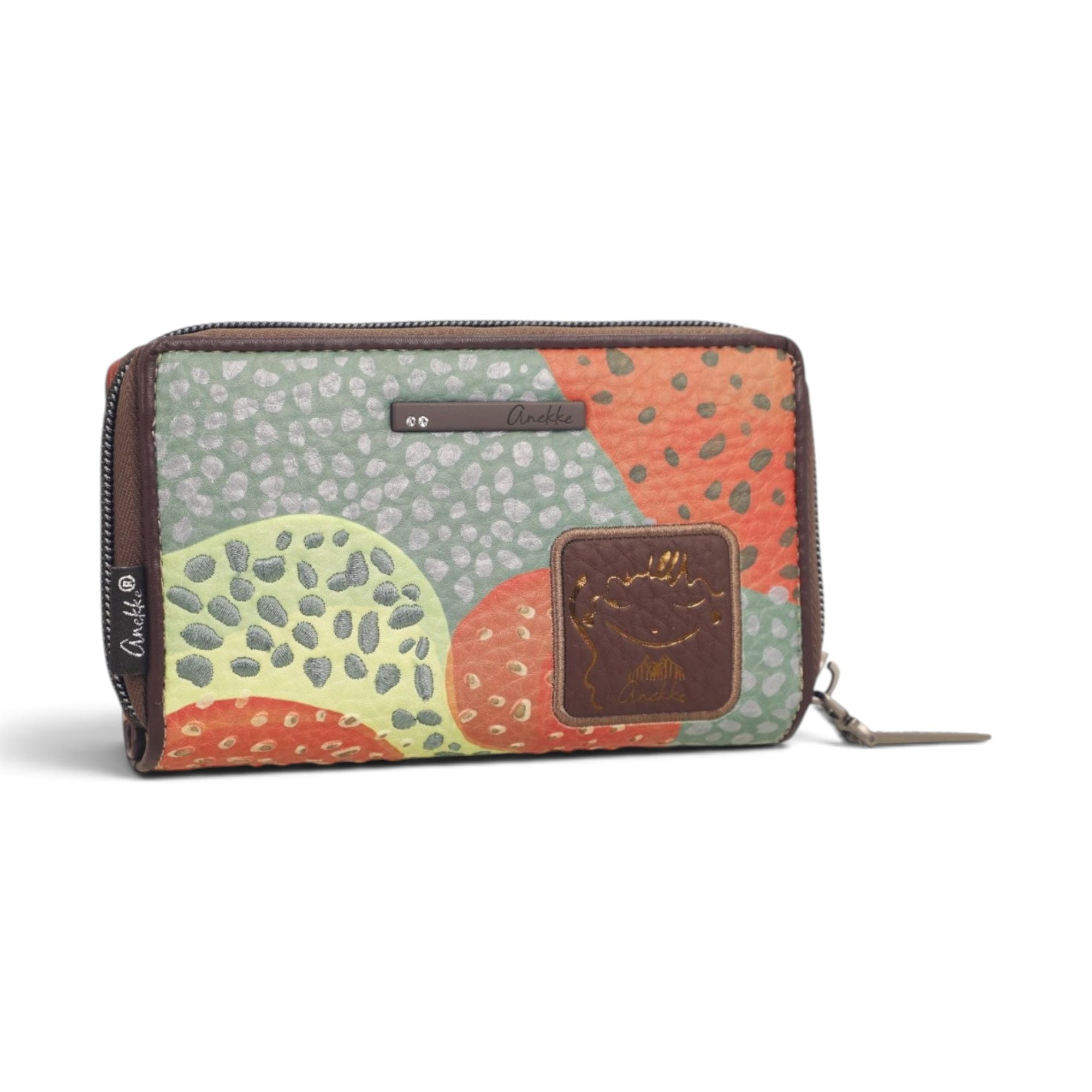
| Medium, rigid | Anekke Odyssey 43839-909 | 15 × 10 × 4 cm | Everyday use, in crossbody bags |
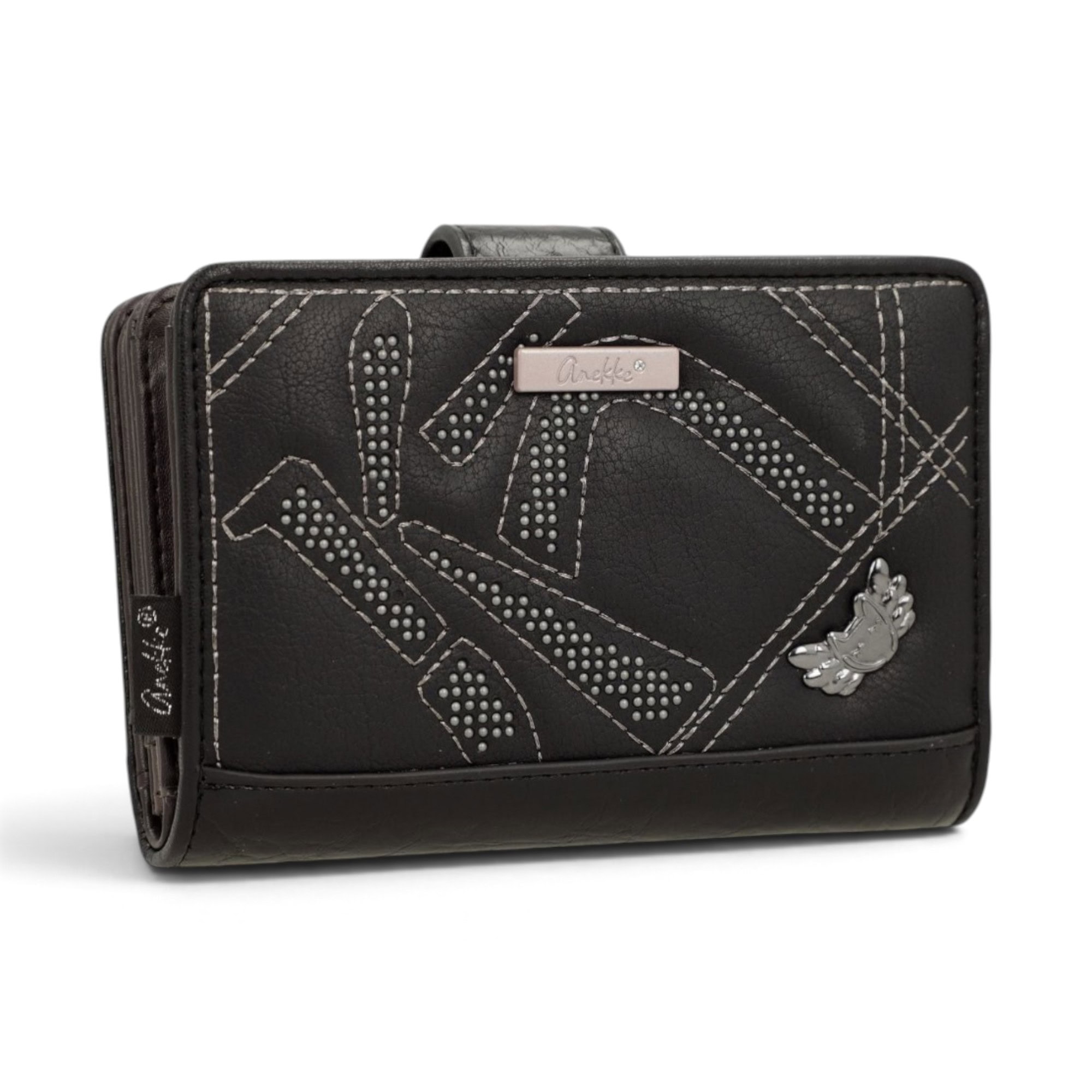
| Compact | Anekke Iron 43759-902 | 14 × 10 × 4 cm | The essentials: a few cards, coins, folded notes |
What RFID protection means
Contactless cards can be read from a few centimetres away. A wallet with RFID protection has a layer that blocks unauthorised reading while the card is inside. It doesn’t protect the money in your account in any other way and it’s no substitute for caution in crowds, but it rules out remote reading. All the models in the table above have this protection, stated in the product title.
How to choose, in three steps
1. Count your cards
Put everything you carry on the table: bank cards, ID card, driving licence, loyalty cards, travel pass. More than eight, go straight to the large models. Fewer than five, a compact model will do and you gain space in your bag.
2. Decide how you keep your notes
If you don’t like folding your notes, you need a model over 20 cm long. Compact models mean folding.
3. Check the closure and structure
A rigid wallet keeps its shape and is easier to find in your bag, but takes up more room. A softer one moulds to the space, but can bend when full. Check the coin compartment too, if you use one.
Wallet and bag from the same collection
Anekke collections use the same prints across several types of product, so you can choose a wallet in the same line as your bag — Orchestra, Tulip, Odyssey, Blossom or Iron. See the models in Anekke bags and Anekke backpacks. A wallet is also a more affordable gift idea than a bag, if you’re not sure of someone’s taste.
Frequently Asked Questions
What size is a typical women’s wallet?
Large models reach 21–22 cm in length, medium ones 15–16 cm, and compact ones around 14 cm. The exact dimensions are given in each product title.
Does RFID protection wear out over time?
No. The blocking layer is part of the wallet’s construction and works as long as the material is intact.
Will a large wallet fit in a crossbody bag?
It depends on the bag. In a 26 cm wide crossbody, a 22 cm wallet will fit, but it takes up almost all the space. For compact crossbodies, choose a medium or compact model.
Do Anekke wallets have a coin compartment?
It varies from model to model. The compartments are described on each product page, so check before you order.
Can I choose a wallet without seeing the bag?
Yes, if you go by the numbers: the length of the wallet and the width of the bag you carry. It’s more reliable than comparing photos.
See the models available
All the models in stock are in the category Anekke wallets. For the brand’s full world, visit the page Anekke.
 RO
 EN